
PR Produced by The Yomiuri Shimbun Business Bureau
HIRAKUZA GINZA TOKYO
Sponsored by the Sumo Live Restaurant Hirakuza Ginza Tokyo
This article is presented by the Sumo Live Restaurant Hirakuza Ginza Tokyo.
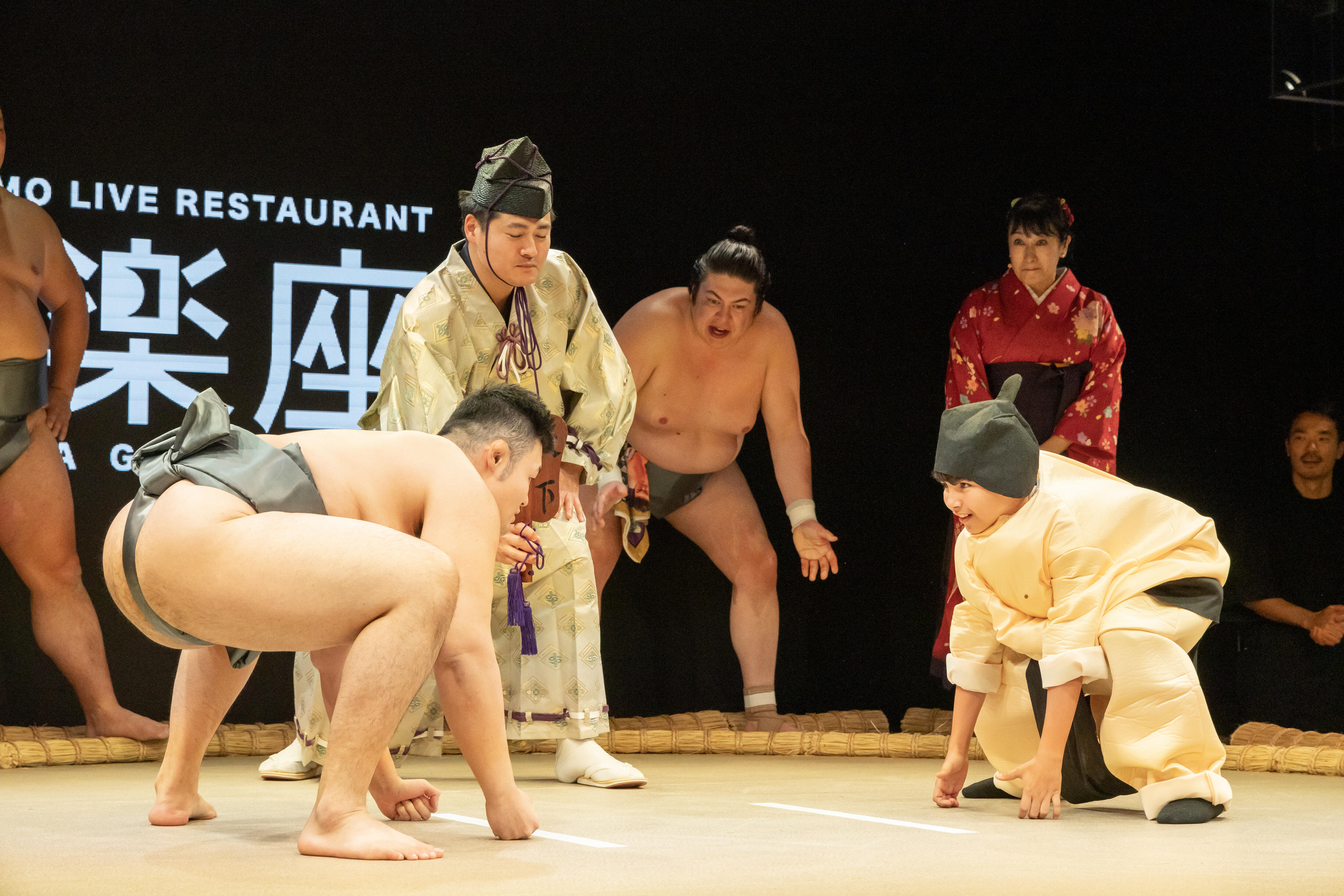
Experience sumo in Tokyo’s Ginza
Live sumo restaurant revives passion in Edo through bouts, interactions
The powerful sounds of “shiko,” the foot stomping performed by sumo wrestlers, echo through a sumo-themed restaurant in Tokyo’s Ginza district in the evenings.
On Jan. 7, the Sumo Live Restaurant Hirakuza Ginza Tokyo (Hirakuza Ginza) opened in Ginza, a district known for its high-end global boutiques.
This unique restaurant has a professional sumo-size dohyo ring and offers live entertainment where the audience can watch sumo bouts performed in the ring and also learn about — and even experience — the sport.
Under the concept “Edo Spirit: Sumo & Culture Experience,” the restaurant showcases sumo, washoku Japanese cuisine and sake, all of which developed in Edo (the former name for Tokyo) during the Edo period (1603-1867), influencing each other in the process. They are combined and presented as an integrated cultural program not only for “watching” but also for “experiencing,” with the ultimate goal of sharing their appeal with the world.
In recent years, the number of foreign visitors to Japan has continued to increase and their interest in Japanese culture has grown even stronger.
On the other hand, the official tournaments of sumo, a unique Japanese traditional sport, are held infrequently and at a limited number of venues, providing few opportunities to watch authentic bouts. Although sumo is widely known, there are very few places to experience the sport up close.
Hirakuza Ginza aims to bring the sumo culture closer to a wider audience.
Sacred, entertaining
During the Edo period, sumo was both a sacred ritual and a form of entertainment enjoyed by ordinary people. Large crowds gathered to watch kanjin-sumo events, which were originally held to raise funds for temples and shrines, enthusiastically cheering on the bouts over sake and food. Hirakuza Ginza recreates this Edo-period fervor for modern-day spectators by incorporating sound, lighting and visual effects.
In the middle of Hirakuza Ginza is a professional sumo-size dohyo stage, surrounded by 153 seats arranged in a 270-degree configuration. Each 120-minute show is a captivating fusion of dining and sumo-themed entertainment.
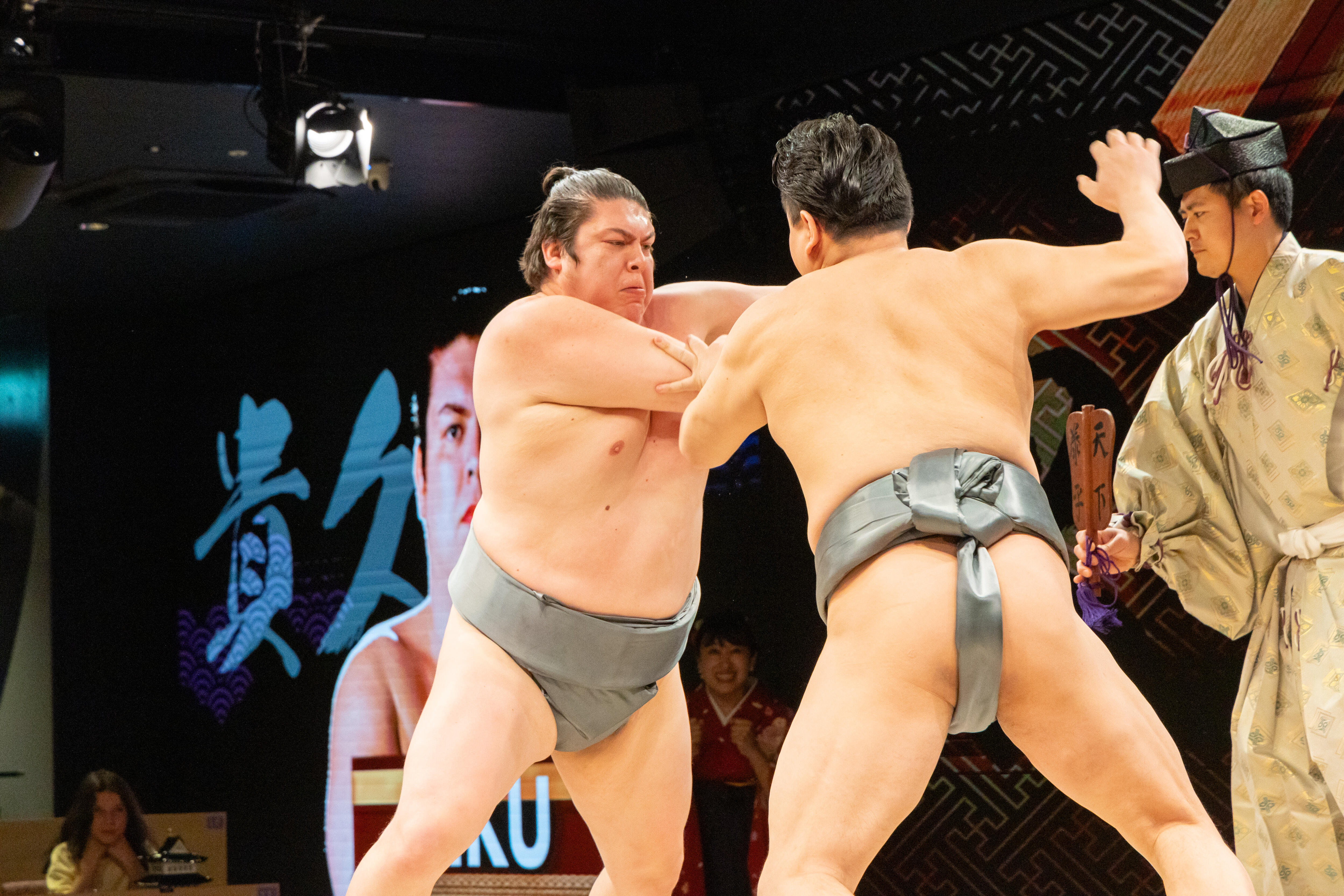
The sumo performance centers on the Japanese values of “shin, gi, tai” (good spirit, technique and physical strength). Specifically, this show encompasses feeling the spirituality embodied in distinctive sumo movements and exercises, such as “shiko” (lifting each leg high in the air and then stomping it down on the ground) and “matawari” (doing the splits with lowering the torso to touch the ground between the legs); understanding of techniques through explanations of winning moves and prohibited actions; and watching powerful bouts performed by sumo wrestlers.
Sumo bouts, which are mock but intense and thrilling like real bouts, are performed to show the audience that sumo is not only a contest of strength but also a culture that values etiquette and forms.
All in English
The entire program is conducted in English, with multilingual subtitles for some parts, making it accessible to the audience from around the world.
Hirakuza Ginza’s greatest feature is its commitment to offering not just sumo as a spectacle, but also providing an opportunity to experience the cultural and spiritual elements behind it.
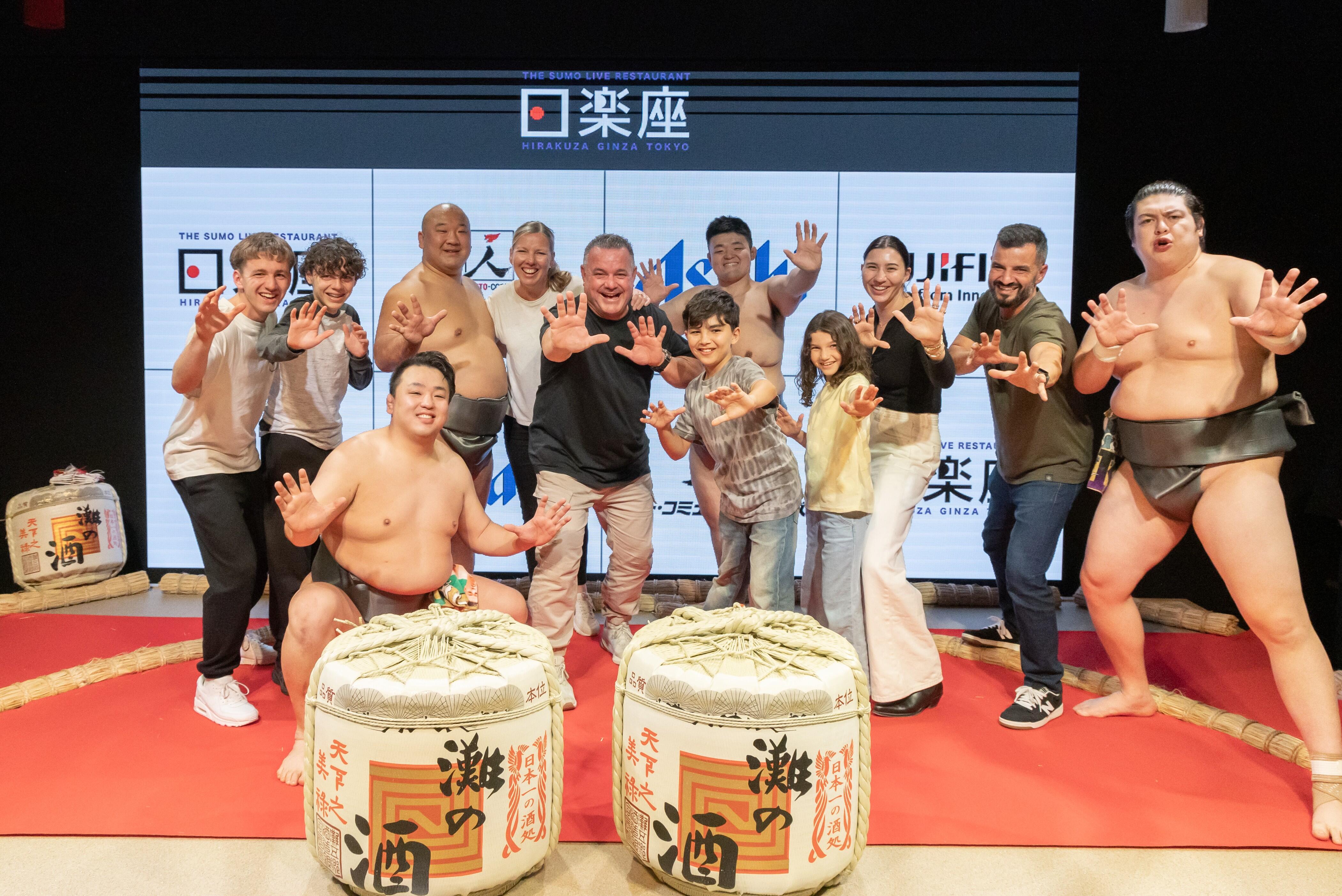
Furthermore, members of the audience who win the lottery have the opportunity to ascend the dohyo stage and wrestle with sumo wrestlers. At the end of the show, the audience can take commemorative photos with the wrestlers on the dohyo stage. These are opportunities to experience the real size of the dohyo and sense the overwhelming presence of the wrestlers facing them. In that moment, the audience will change from being observers of the culture to being active participants in it.
Kaiseki meal, vegan, halal options
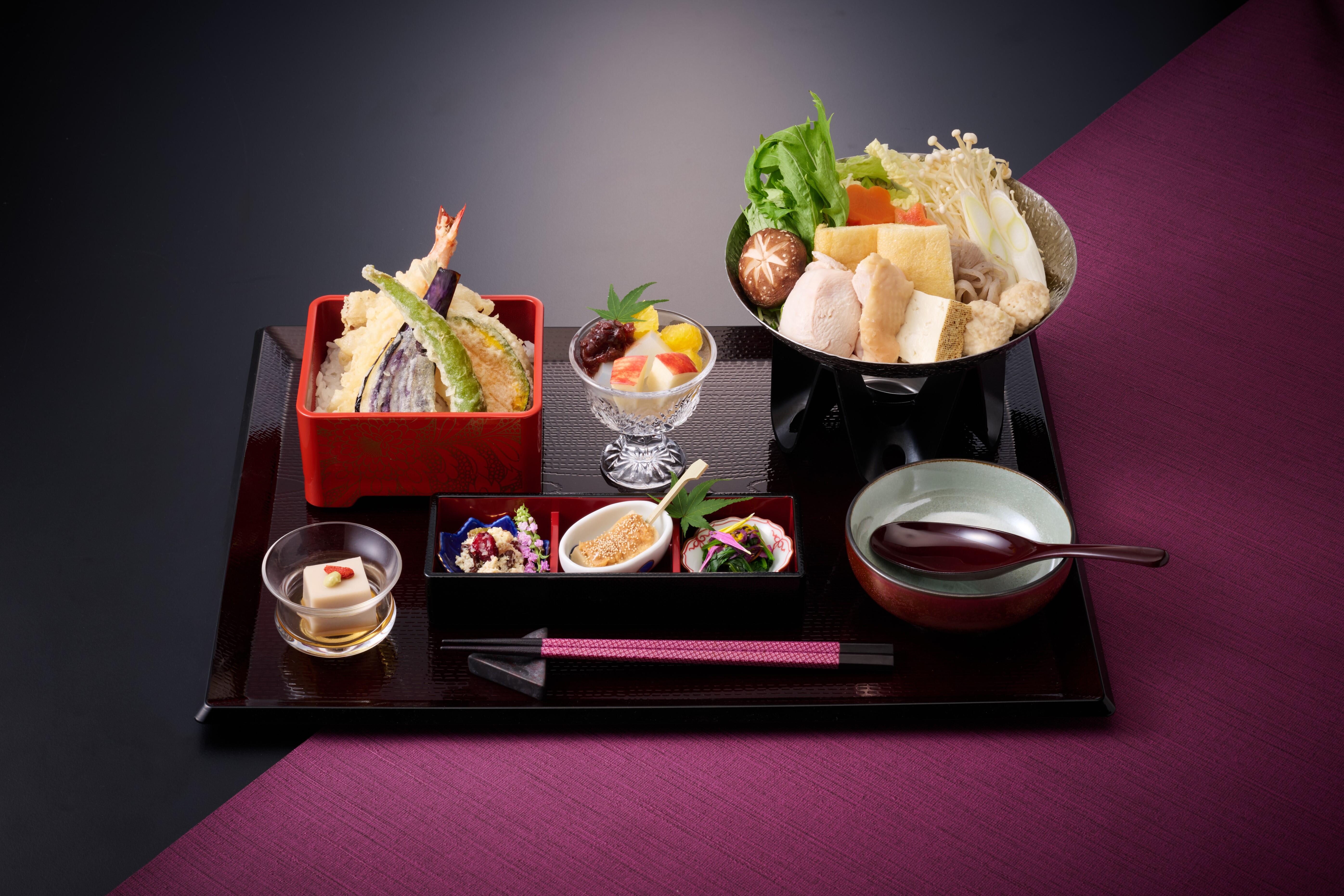
Food is also an essential element in experiencing the flourished Edo culture.
The menu at Hirakuza Ginza includes a “kaiseki” multi-course meal, featuring “chanko nabe” hot pot dish traditionally eaten by sumo wrestlers, and tempura, to represent Edo’s street food culture. The dinner is carefully designed to emphasize color combinations and seasonal ingredients to convey the spirit of “iki” (an urban, dashing style with stylishness) and the aesthetic sensibilities cherished in Edo. The restaurant also offers vegan, halal and children’s menu options, ensuring a welcoming environment for diverse customers.
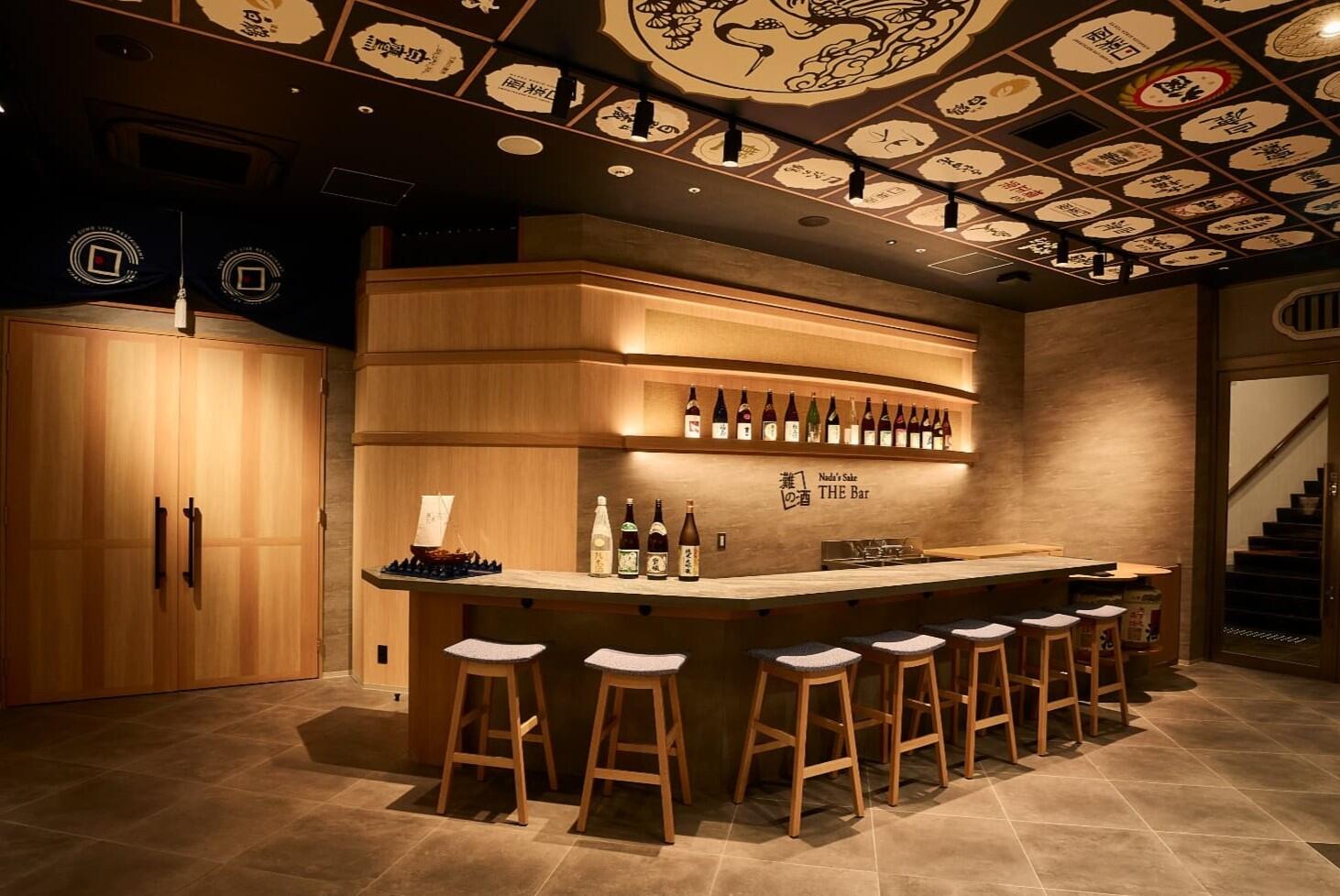
The “Nada no Sake The Bar” at Hirakuza Ginza offers a selection of high-quality sake produced in the Nada Gogo (five sake production areas in present-day southeastern Hyogo Prefecture). During the Edo period, sake produced in Nada Gogo and sent to Edo by “tarukaisen” ships to transport sake contained in casks was called “kudari zake” and beloved by local consumers. Nada Gogo’s sake symbolizes the Edo culture that evolved and refined itself alongside the city’s growth.
Customers at Hirakuza Ginza can thus experience the multilayered culture nurtured by the city of Edo through sumo, food and sake.
Ginza as a symbolic location
Hirakuza Ginza’s location is also symbolic.
The name “Ginza” (meaning “silver guild”) originated during the Edo period, when a silver coin mint called the Ginza Office was established, after which Ginza thrived as a center of economy and culture. Today, it remains an esteemed place where tradition and innovation intersect. It is significant that Hirakuza Ginza disseminates Japanese traditional culture from this heart of Japan.
Sumo, washoku, sake and Ginza: These cultural legacies developed and refined themselves while influencing each other during the Edo period.
Hirakuza Ginza showcases the interconnected relations of these legacies, rather than presenting their fragments separately. Hirakuza Ginza is a prime example of offering an integrated cultural experience, aiming to convey the values and aesthetic sensibilities cultivated by the Japanese people in a more multidimensional way.
Prices vary depending on seat type and age.
For more information, visit: https://hirakuza.net/tokyo/