
PR Produced by The Yomiuri Shimbun Business Bureau
AIRPORT CITY IZUMISANO
Sponsored by Izumisano City
Modern and classical tourist attractions
Izumisano, a city in Osaka Prefecture, extends across the sea from Kansai International Airport and has a long history. The city not only serves as an air gateway but also has many tourist attractions and historical and cultural spots, making it as appealing as major tourist destinations elsewhere in the Kansai region. When touring Kansai, a stop to explore Izumisano is a must.
Panoramic views, shopping
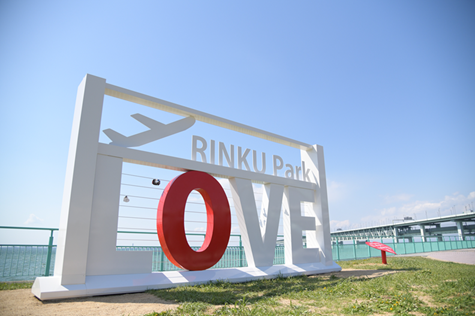
Rinku Town is an urban subcenter and includes many hotels and shopping centers, attracting about 20 million visitors annually. The area offers excellent accommodations and easy access to other cities in Kansai and the surrounding region for exploration. The area itself is captivating. Visitors can enjoy magnificent panoramic views of the sea and mountains from its landmark Ferris wheel. The adjacent Rinku Park features Marble Beach with dazzling white pebbles. From the beach, visitors can watch planes taking off from and landing at Kansai International Airport. The beach is particularly beautiful at sunset, being on the “100 Best Sunsets in Japan” list. Rinku Premium Outlets in Rinku Town is one of the largest outlet shopping centers in western Japan. It offers a resort-like atmosphere where visitors can enjoy shopping in a relaxing space. It is an ideal spot for last-minute shopping before returning home.
‘Onsen closest to the world’
Onsen hot springs are popular among foreign tourists. In fact, Izumisano has a nice hot spring area, called Inunaki Onsen, which is also known as Inunakiyama Onsen. Since Kansai International Airport opened in 1994, it has been called “the onsen closest to the world.” It quietly lies in the mountains, with several onsen facilities and inns surrounded by lush nature. Visitors can relax and soak in the onsen hot springs while enjoying the seasonal mountain scenery. The autumn foliage and winter snowscapes are particularly impressive. Day trips to the onsen are also possible. The onsen is located at the foot of a training site of Shugendo, a fusion of mountain worship and Buddhism that conveys the mysteries of nature. Visitors can also enjoy sightseeing in the surrounding area, such as visiting a historic temple and walking along trails.
Exchanges through food
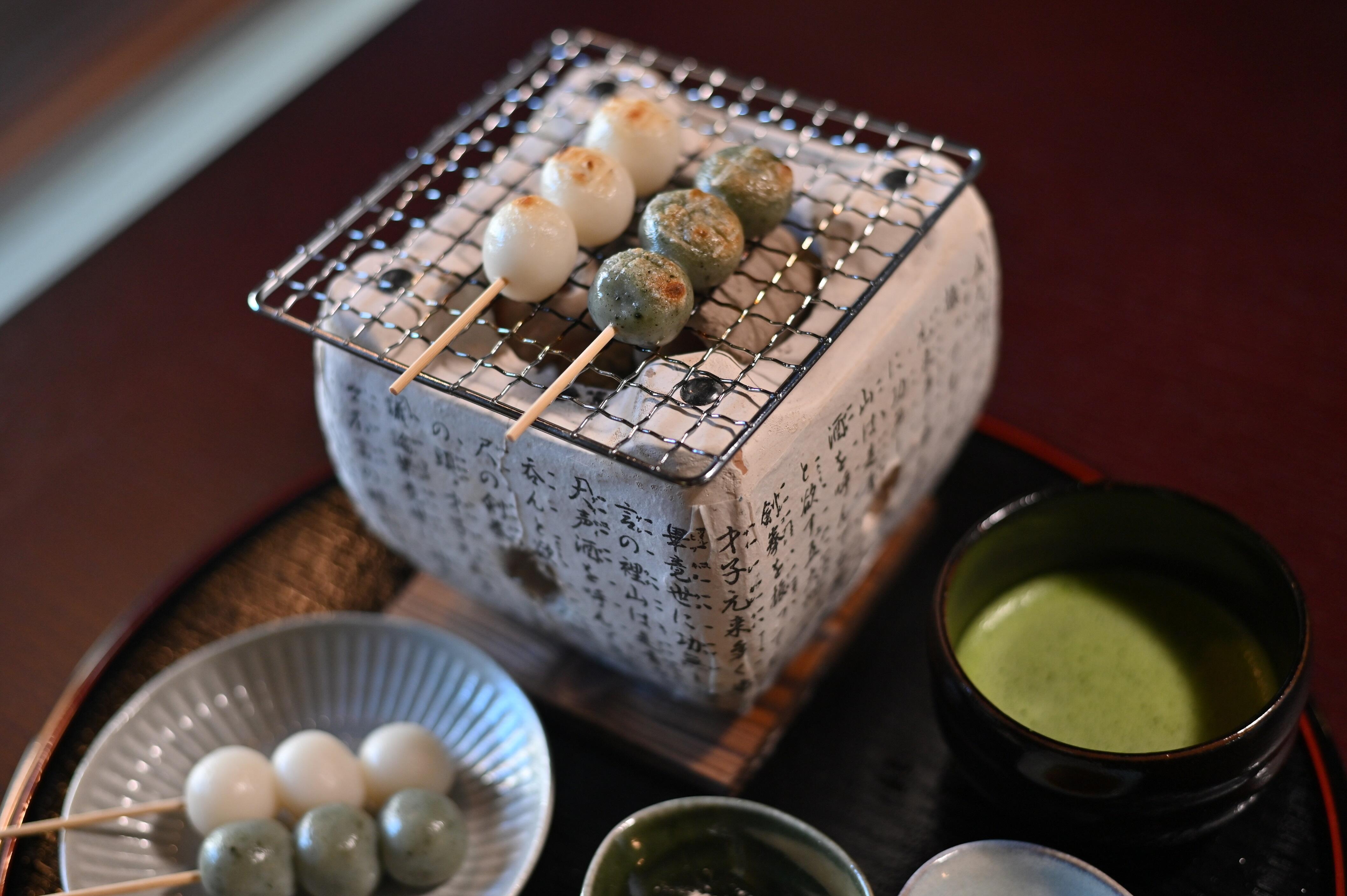
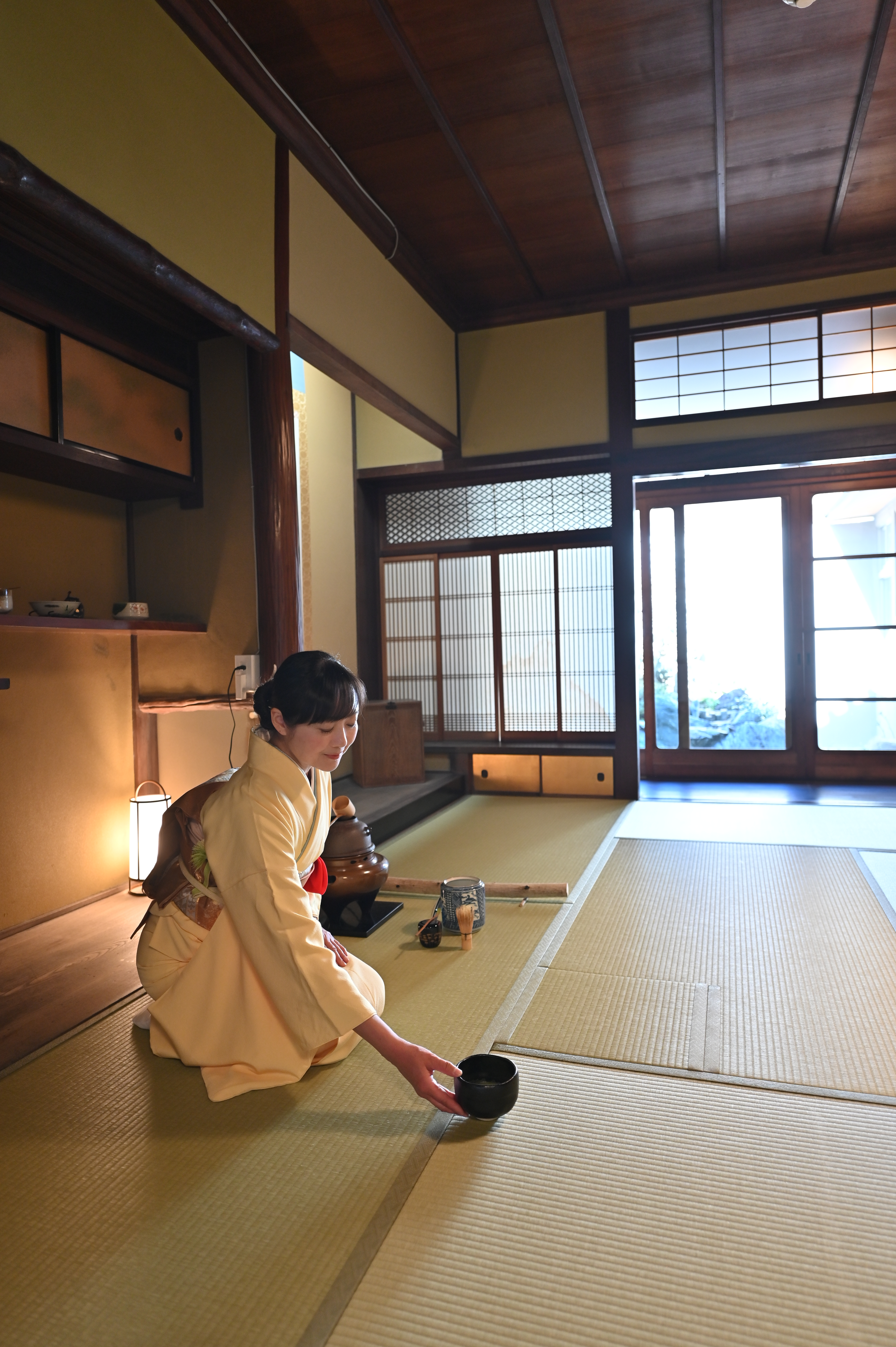
For those interested in exchanges and experiences through Japanese cuisine, the Sanomachi-an Japanese-style cafe is highly recommended. This cafe is housed in a renovated traditional machiya townhouse that is more than 100 years old and formerly housed a sake shop. Visitors can feel good, old Japanese living surrounded by classic Japanese fixtures and fusuma sliding doors. A popular menu item is the “dango dumpling set.” Customers can enjoy roasting dango, a traditional Japanese sweet, themselves. As the dango turns light brown, a nice and toasty aroma fills the shop. The dango have a distinctive chewy, elastic texture, and they are carefully handmade one by one in the cafe. There is also a Japanese-style room with tatami mats where visitors can experience the chado (tea ceremony), one of Japan’s cultural traditions, for ¥2,000, tax included. This is a popular activity among foreign tourists. Near the building is a charming shopping area, which is an ideal stop during a stroll through the area. It is located about a five-minute walk from Izumisano Station on the Nankai Electric Railway.
3 Japan Heritage sites tell ancient history
Izumisano is home to three Japan Heritage sites recognized by the Cultural Affairs Agency. Japan Heritage sites present the cultural and traditional treasures of various regions across Japan through “stories,” conveying their historical charm and unique characteristics. Throughout the city, visitors can encounter tangible and intangible cultural assets related to these sites. An outline of each site and its appeal follows.
Villages depicted in the Tabihikitsuke diary and two pictorial maps: Landscape of Hinenosho, a manor in medieval Japan
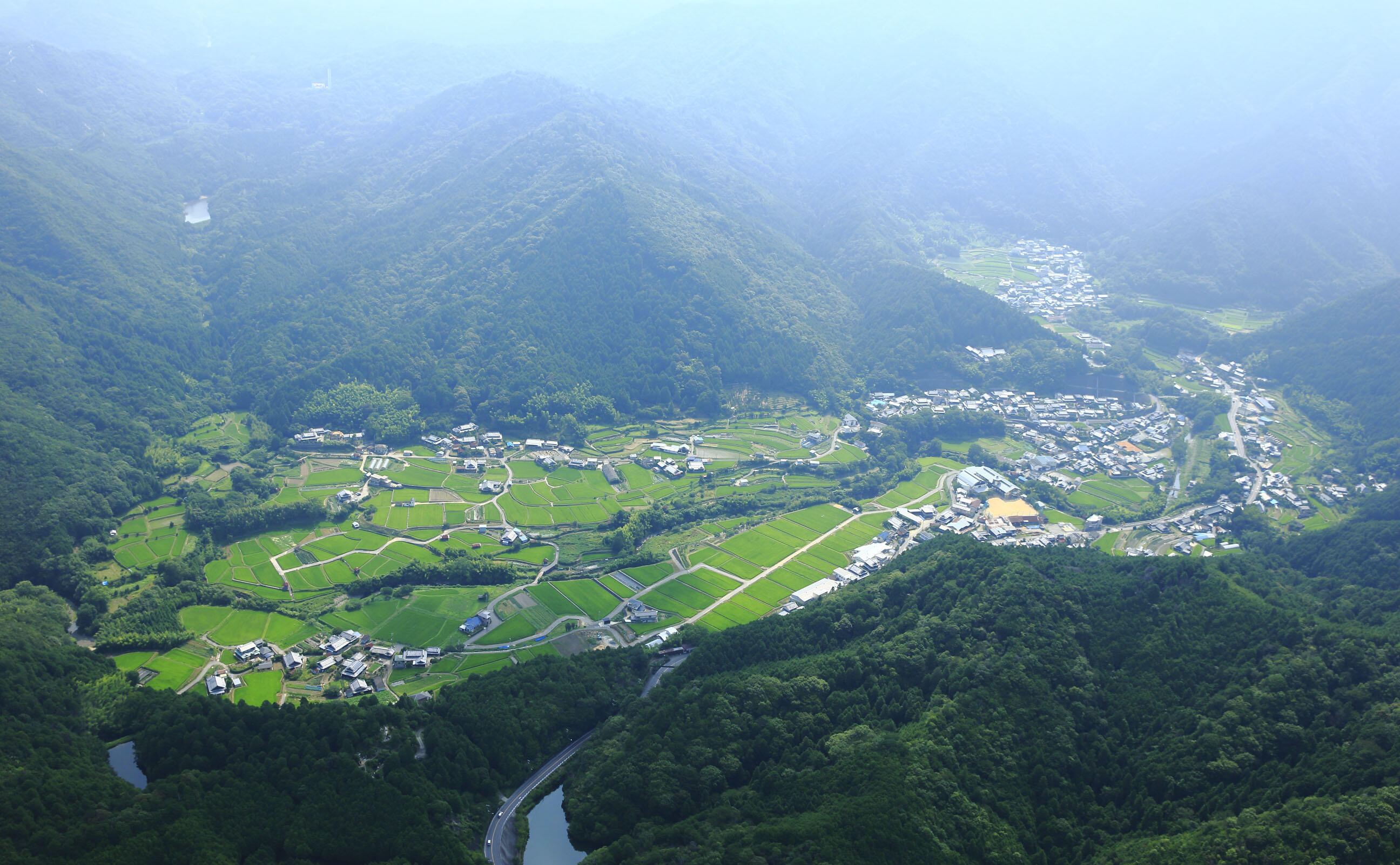
About 800 years ago, Hinenosho was a manor owned by a powerful aristocratic family, encompassing almost the entire present-day Izumisano. In the Ogi area of southern Izumisano, which is about 25 minutes by bus from Izumisano Station on the Nankai Electric Railway, the rustic scenery from the manor era remains and refreshes visitors. This landscape is designated as a national important cultural landscape. Additionally, 16 sites comprising Hinenosho, including temples, shrines, religious halls and irrigation ponds, are designated as national historic sites. Among them, the tahoto pagoda at Jigen-in temple is designated as a national treasure, and the temple’s kondo hall is designated as an important cultural property. Visitors can enjoy exploring this area while walking with a map in hand.
Cargo vessels carrying goods, culture and great dreams of magnificent fortunes by men who overcame rough waves: Kitamae-bune’s ports of call and shipowners’ residences
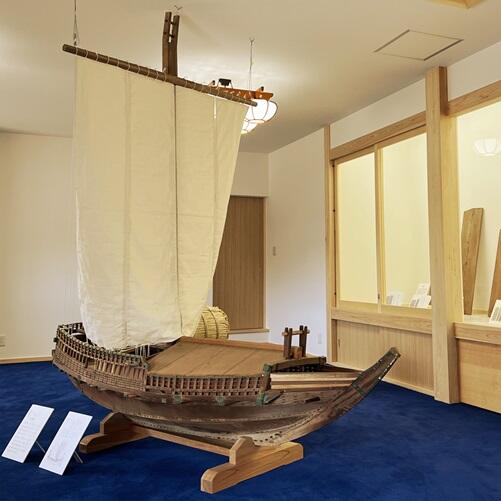
Kitamae-bune were wooden sailing ships that traveled between Osaka and Hokkaido via the Sea of Japan from the Edo period (1603-1867) to the Meiji era (1868-1912), trading at ports along their route. The Sano Machiba quarter in Izumisano flourished as a residential area for owners of Kitamae-bune ships, and it still tells of the prosperity of wealthy merchant families that produced successful ship owners and competent captains. The townscape evokes the atmosphere of the time with its classic townhouses, clusters of storehouses, the former site of a wealthy merchant’s main residence and a Buddhist temple bell dedicated to praying for safe voyages. These features are scattered north of Izumisano Station on the Nankai Electric Railway.
Katsuragi Shugen: Origin of Shugendo mountain asceticism preserved and passed down jointly with villagers
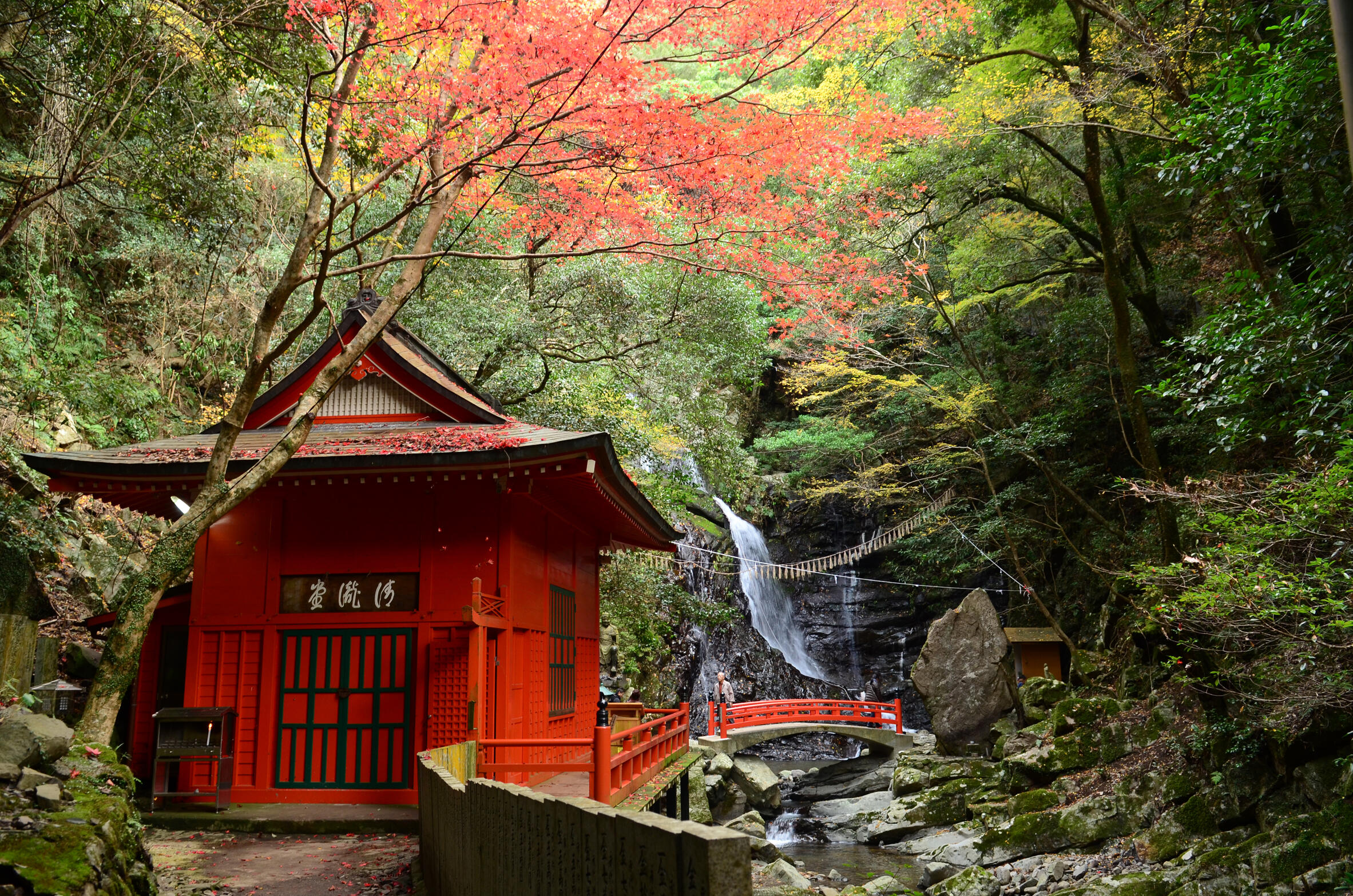
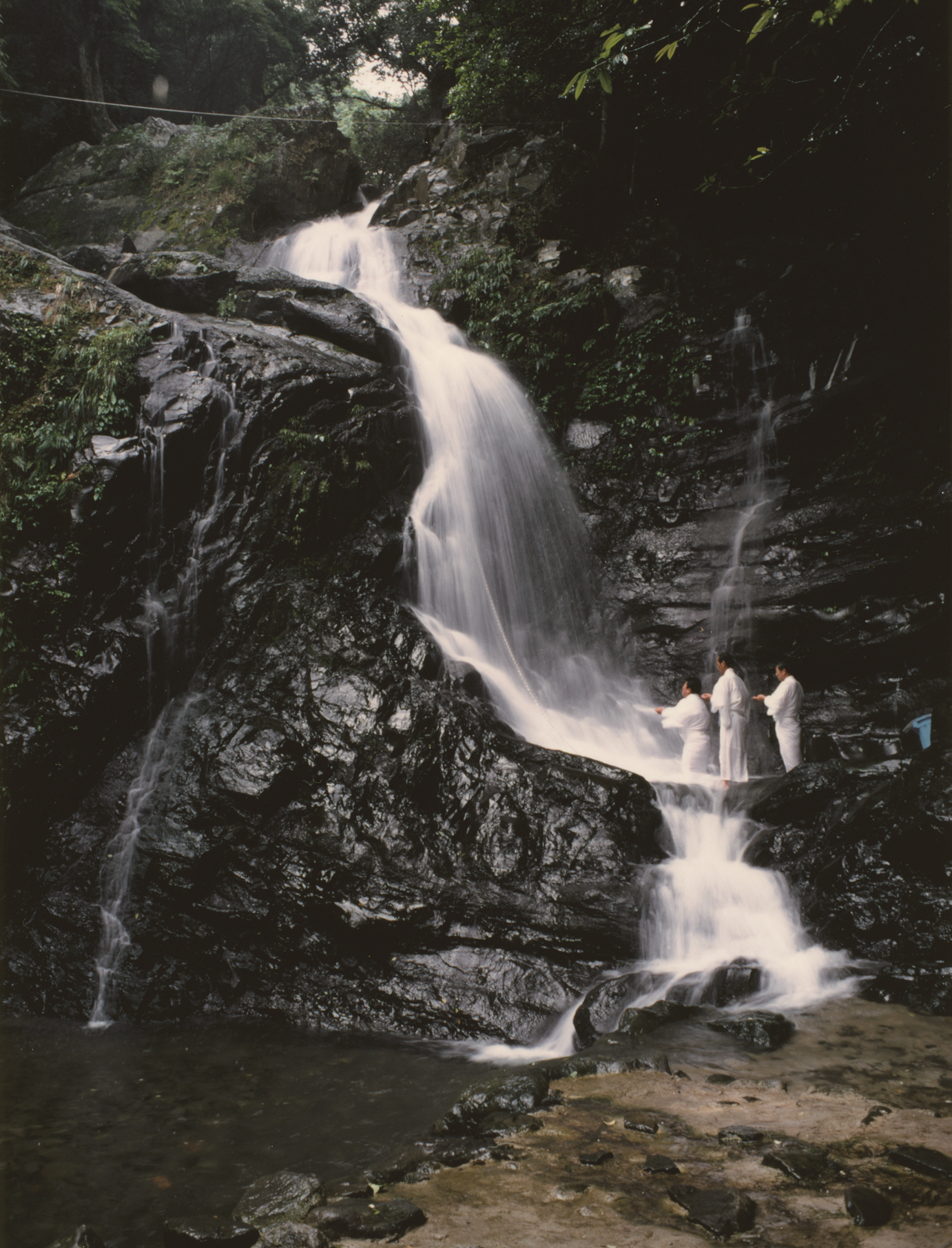
Katsuragi Shugen refers to a tradition of ascetic training practices and training sites for pilgrimages, including kyozuka (sutra mounds), giant stones, shrines and miniature shrines, located in the Katsuragi mountains towering deep in the Kansai region. Parts of Izumisano, such as the area around Mt. Inunaki, are included in places associated with the tradition. The tradition originated when En no Gyoja, the founder of Shugendo, buried the chapters of the Lotus Sutra one by one throughout the mountains, creating 28 sutra mounds. The rigorous training route covers 112 kilometers through rugged mountains, requiring practitioners to beat paths through untrodden wilderness, scale cliffs and walk alongside mountain streams. Even experienced ascetic practitioners cannot complete the route in just one or two days. The ridge trails connecting to the training sites have been maintained for visitors to enjoy hiking. Additionally, Shipporyuji temple located deep in the ranges of Mt. Inunaki offers a one-day ascetic training experience where participants can try waterfall meditation and peering over rocky ledges.
Kansai International Airport: Gateway to Japan
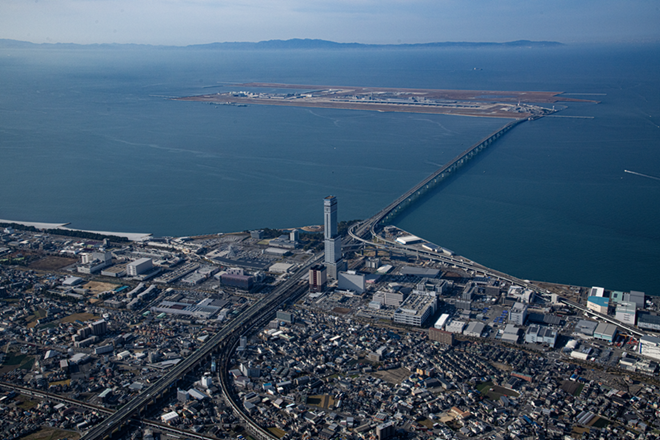
The urban areas of Izumisano extend along the sea facing Kansai International Airport. The airport, which was constructed in Osaka Bay, is the world’s first offshore airport built entirely on an artificial island. It operates 24 hours a day and has two runways: one that is 4,000 meters and another extending 3,500 meters. It connected 67 cities worldwide according to the summer 2025 schedule and served 34 million passengers last year for both international and domestic flights. It is the only airport in the Kansai region with regular international service. The airport is also a key starting point for touring Japan: It is about 40 minutes to Namba in central Osaka, about 75 minutes to Kyoto and about 95 minutes to Nara, each by train. Passengers arriving at the airport will first travel to the urban area of Izumisano by crossing the 3,750-meter-long connecting bridge. Essentially, Izumisano serves as the gateway to Japan for international visitors.
Izumisano boasts an abundance of natural, historical and cultural resources filled with Japanesque atmospheres. Sightseeing and staying in Izumisano, the city closest to Kansai International Airport, as well as taking a short trip in the city during your layover can make your journey even more memorable.
Travel information
◆Izumisano City Tourism Association Website◆Sanomachi-an(Izumisano City Tourism Association Website)◆Japan Heritage: Hinenosho (Izumisano City Website)Japan Heritage: Kitamae-bune (Kitamaebune Association Website)◆Japan Heritage: Katsuragi Shugen (Katsuragi Shugen Japan Heritage Promotion Office Website)