

Street Design To Transform a City
Shino Miura/Associate Professor, Faculty of Science and Engineering, Chuo University
Area of Specialization: Urban Design
1. The essential role of streets
A street is not merely a space that enables through traffic; rather, it is a space that connects the "in-between activities" derived from people's daily lives. From the frequency of pauses and opportunities for conversation to whether children and the elderly can feel at ease in the space, the quality of everyday life is deeply related to how streets are designed and managed. For that reason, reconsidering how streets are used and which speed people move along them is an effective way of reexamining the lifestyle of a community. At the same time, transforming streets is often accompanied by emotional opinions from the general public, and is difficult to resolve simply by presenting drawings or planning documents of future vision. In such cases, pilot projects or so-called social experiments are often undertaken. In recent years, the scope of these projects has expanded beyond streets to include spaces such as vacant lots, parks, and river spaces.
Street pilot projects have been introduced when introducing new forms of use such as transit malls and open cafés. Their aim is to disseminate new concepts and clarify practical challenges during their implementation. My research focuses on the processes for introducing street design that transforms a city, as well as the development of evaluation indicators to assess what the project should conduct next.
2. Placemaking that envisions the next generation
The value of pilot projects lies not only in their results, but also in visualizing the fundamental question of whose voices are reflected in decision-making through the processes of planning and management. Currently, urban development rarely proceeds without approval from parties with institutional and economic influence; specifically, government authorities, landowners, local commercial associations, and industry groups. In many cases, there are limited points of contact with young people who will bear responsibility for the future of the community. This results in a structure in which the flexible perspectives and new lifestyle visions of future generations are not sufficiently reflected in discussions of urban development. An initiative conducted to question this structure was the Machi-Nichi Keikaku(1), which was implemented in the Heiwa-dori Shopping Street in Asahikawa City. I participated in the initiative as a specialist. Members with diverse backgrounds collaborated as directors of a placemaking experiment that reinterpreted the street as a place of belonging to the community, and the project received the Good Design Award (FY2025). The team functioned as an integrated group consisting of the responsible officials of Asahikawa City, consultants, shopping street leaders who understand the local character of Asahikawa, young and active shop owners, a collaborative association between a credit union and student groups, designers involved in creative city policy, and urban design specialists who had returned to their hometown. The Machi-Nichi Keikaku became an opportunity for these members to help the community by applying their respective professional skills and talents in communications, art, coordination of collaborators and data analysis. Furthermore, opening to people who are not urban design specialists can help bring the discussion closer to the concerns of ordinary citizens.
During the same period, I was invited to participate in a project operated by the Japan International Cooperation Agency (JICA) in the World Heritage district of Luang Prabang, Laos. The major objective was to restrain vehicle traffic across the district and introduce public transportation (buses) in a manner that would enhance the heritage value of the area. Rather than ending with the formulation of a master plan, the proposal involved conducting phased pilot projects in transportation, fostering the development of administrative personnel during the process, establishing a community center as a base for these activities, and further using the center to examine placemaking and promote environmental improvements along the district's main street. These ideas were proposed through discussions among the JICA officers in charge, specialists, and consultants in the fields of landscape and transportation. The ideas were also accepted by the local community. It is important for community members to articulate the environment which they wish to create through urban design initiatives. I believed that the concept of this project should continue to serve as a guideline for sustained action even after the end of support from Japan. Such discussions were conducted in workshops. However, the fact that Laos is a socialist country, together with the progress of internationalization and the differing nationalities of the original residents and business operators, made it even more difficult to determine who the space should be designed for. Accordingly, administrative officials were first provided with input on why such placemaking is essential and on the need to consider organizations and financial resources for their management. On that basis, opinions were gathered on equal footing from stakeholders such as village heads, monks, hotel and roadside business owners, and university students. This led to the identification of a shared image of the landscape centered on local culture (products) and the creation of a lush green environment. Local landscaping businesses were encouraged to participate in the pilot project, and as many as 850 temporal plantings were arranged along the target section of the street. Residents along the street actively utilized these plantings, thus creating a streetscape and moments of the in-between daily life unique to this region (Photo 1).
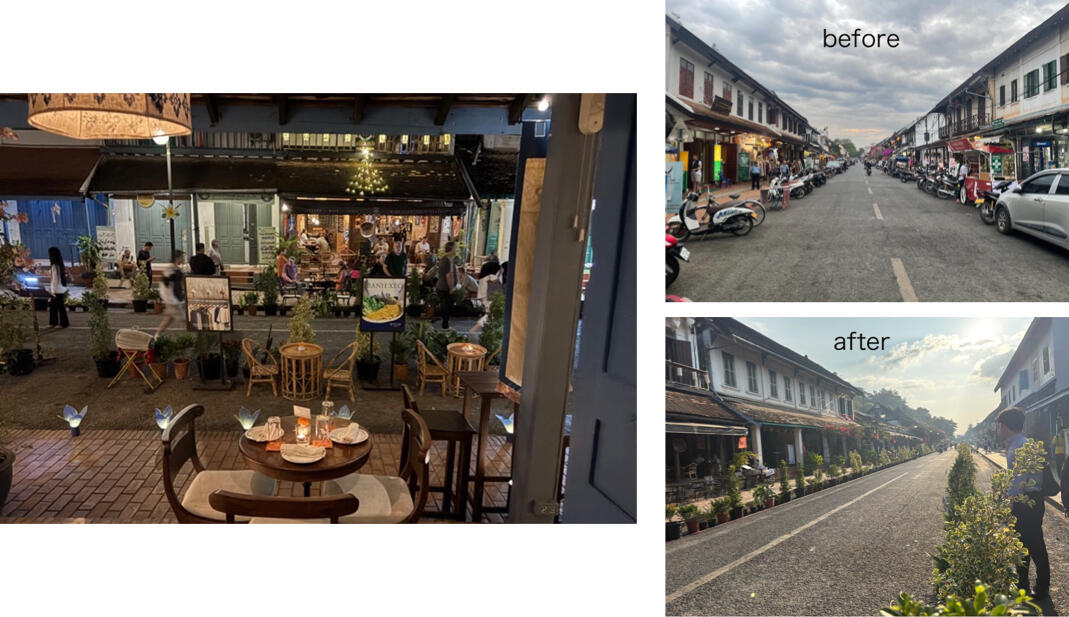
Photo 1: Pilot project in Luang Prabang
3. Verifying the effects of placemaking
There remains considerable scope for research on verifying the effects of improving comfort through initiatives shown in Chapter 2. It is common to administer questionnaires, such as those which inquire about satisfaction levels. Personally, in research that began before my appointment at Chuo University(2) and which I continue today together with my students(3),(4), I have been exploring whether capturing unconscious changes in behavior might enable detection of effects with greater sensitivity. (Figures 1 and 2 describe research attempting a quantitative understanding of demand for places, that is, where people want to stay).
On a different note, the management of sidewalks on typical streets and roads in Japan often puts significance in terms of preventing crowd accidents. Therefore, evaluations still tend to rely on congestion density and level-of-service measures dating back to the 1970s. Even recent studies by researchers often focus on resolving congestion (by refining flow models) or on alleviating perceived crowding. In other words, pedestrians are treated by analogy with vehicles, and evaluations typically rely on a single indicator. Through research such as that shown in Figures 1 and 2, I aim to deepen design thinking about how limited street space can better accommodate the diverse activities of pedestrians; for example, how amenities can be more actively provided and whether closer collaboration with adjacent property owners is necessary.
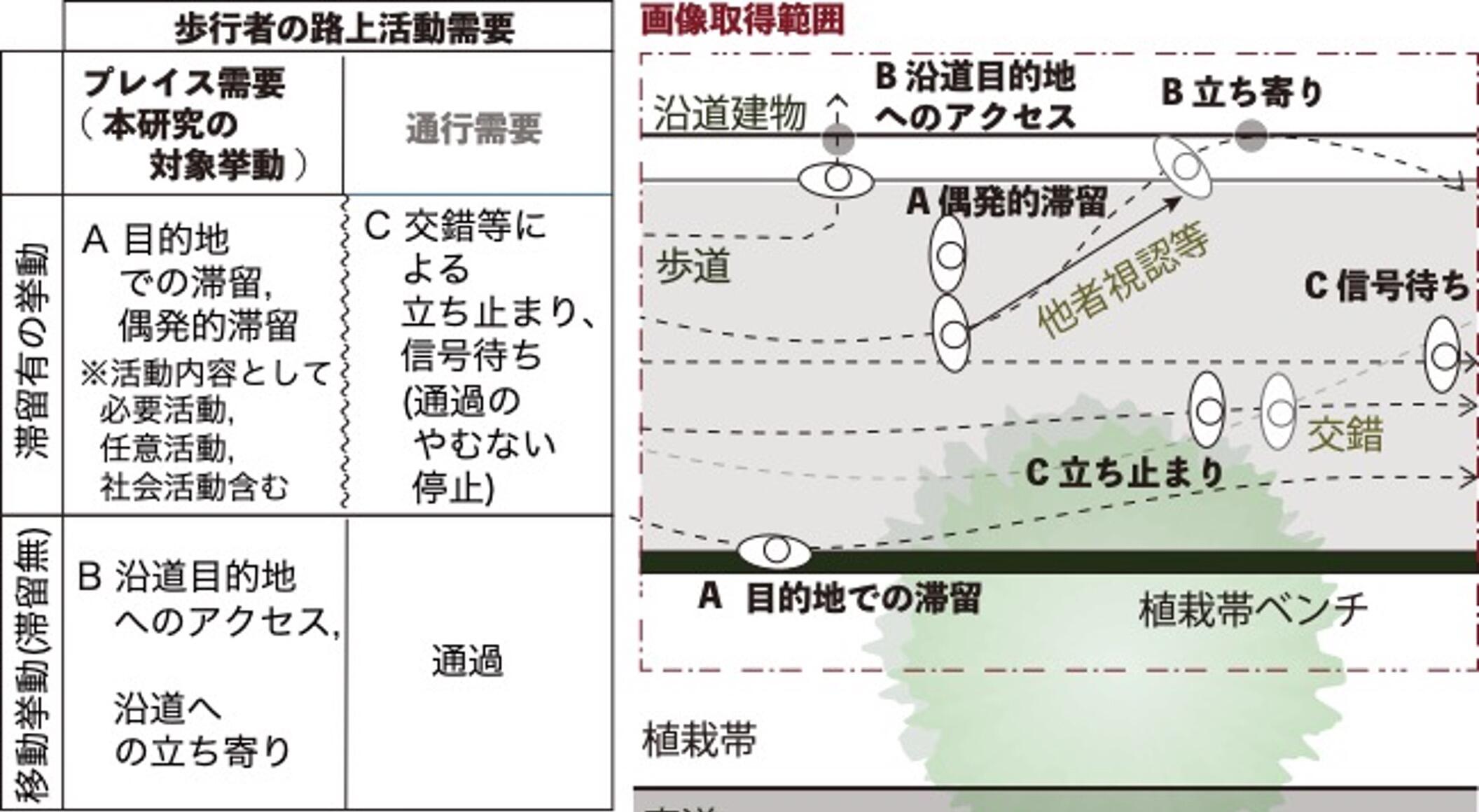
Figure 1: Research framework(2)
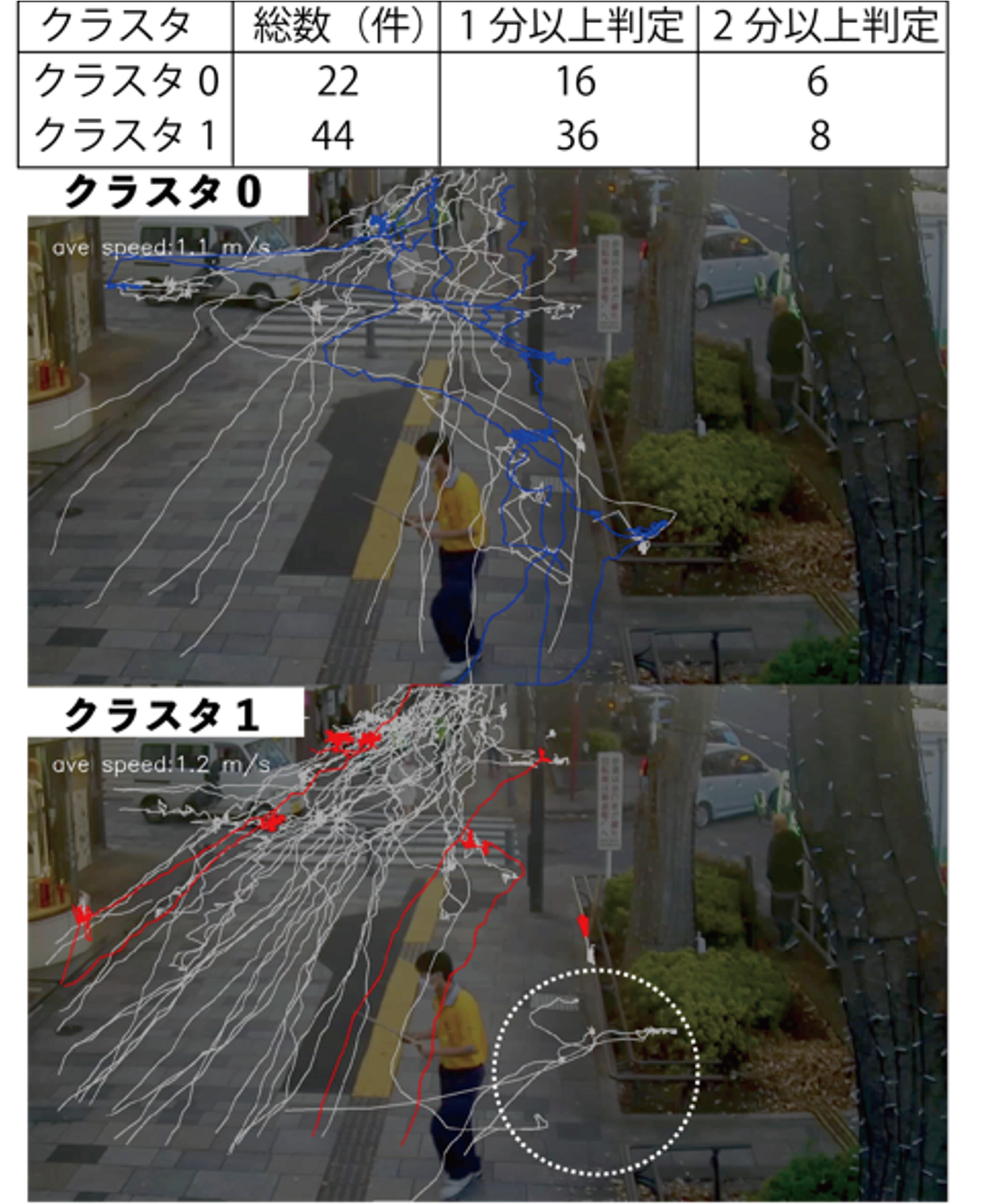
Figure 2: Analytical image(2)
4. Conclusion
Placemaking that seeks to reconfigure street space allows people to experience changes in behavior, relationships, and the surrounding landscape, which in turn strengthens the impetus for investing in physical improvements. In Japan, some still regard placemaking merely as a form of "bustle" or spatial staging; however, placemaking should be widely understood as a valuable opportunity for the development of human resources and relationships.
Since the 1980s, many pilot projects in European cities have often been conducted over long periods with the expectation that new technologies and policies will eventually be implemented in full. In the process, new conditions become part of everyday life, people's behavior changes, and consensus gradually forms. In contrast, pilot projects in Japan are often set for short periods and are used to check whether problems exist. A repeated annual cycle of preparation & practice becomes necessary before full implementation, placing a heavy burden on practitioners in the field. Fostering a culture of long-term experimentation intended for eventual full implementation is therefore an important issue in Japanese original street design going forward.
Reference URLs and Literature
(1) Shopping Street Social Experiment "Machi-Nichi Keikaku" (2025).
https://www.city.asahikawa.hokkaido.jp/kurashi/408/800/d081962.html
(2) Miura, S., Song, J., and Ishizuka, T. Fundamental Study on Sidewalk Performance Index for "Place" Demand by Pedestrians Adopting Image Processing and Machine, Journal of the City Planning Institute of Japan, 58 (2), p.p. 187 to 202, 2023.
(3) Koshikawa, K., Miura, S., and Igeta, Y. Study on Spatial Evaluation Methods Based on Pedestrian Gait and Behavior: Focusing on Sozoro-aruki (Leisurely Strolling), 72nd Presentation of the Committee of Infrastructure Planning and Management, Autumn Conference, Japan Society of Civil Engineers, 2025.
(4) Igeta, Y., Miura, S., and Deguchi, A. Development of an Evaluation Indicator for 'Sozoro-aruki' Walkability in Japanese Hot Spring Resort Areas Using LiDAR-Based Pedestrian Behavior Data, AMPS Proceedings Journal Series, scheduled for publication in 2026.
Shino Miura/Associate Professor, Faculty of Science and Engineering, Chuo University
Area of Specialization: Urban DesignShino Miura was born in 1987. She graduated from the Graduate School of Frontier Sciences, The University of Tokyo and obtained a Ph.D. in environmental studies. After holding positions including Assistant Professor in the Institute of Urban Innovation, Yokohama National University, she has served as Associate Professor in the Department of Civil and Environmental Engineering, Faculty of Science and Engineering, Chuo University since the 2024 academic year. She serves as Co-representative Director of the Street Life Makers (a general incorporated association). She has continued to make proposals regarding human-centered street policies after serving as a core committee member of the MLIT Roundtable on Urban Diversity and Innovation (2019).
Her edited works include “https://book.gakugei-pub.co.jp/gakugei-book/9784761526993/”, and her translations include “Streetfight: Handbook for an Urban Revolution (by Janette Sadik-Khan and Seth Solomonow)” (both published by Gakugei Shuppansha), and more.

- Share articles


