

Reconstructing International Trade Through the Value Chain Management
Dr. Shunichi Enomoto
Associate Professor, Faculty of Commerce, Chuo University
Areas of Specialization: Management, International Trade, and Global Management
Now I teach "International Trade" at Faculty of Commerce, Chuo University, focusing on different aspect of international trade from economics approach by other commerce or business administration departments.
Most of their lecturers teach "international economic theory" and elucidate the structures and principles governing international flow of goods and services. Students learn how to analyze statistically the movement of goods and services between countries and understand how the world economy works from the perspective of inter-nations flow. I respect the usefulness and intellectual value of such an "International Trade" to students. But here lost are real transactions or real business entities of international trade.
Commerce explores business transactions between companies and their customers and management studies, focusing a corporation, examine its business strategy, planning, and practices. Although the international trade is lectured at commerce or business administration departments, why does the class teach the structures and principles of the flows of goods and services between countries, not any real transactions or real business entities of international trade? Since its foundation, Chuo University has set up its mission to train and nurture persons managing businesses. In its Faculty of Commerce, then, the "international trade" class should focus on real business or real transactions and elucidate how companies formulate and manage their value chain to accomplish their strategic goals and to respond to the changing global business conditions?
This idea sounds good but is difficult to realize. Some may suspect that this "International Trade" is really the same as "International Business" or "International Business Management" course and that it lacks its own raison d'être when it teaches the same contents on multinational enterprises such as global strategy, localization, organization, human resource management, as "International Business" does. To this point, I reinterpret global transactions from the viewpoint of value chain and reconstruct the global activities of companies, including international trade (export and import), as management of global value chain, i.e. planning, forming, operating and developing of value chain on the global plain.
Value chain is the process or series of activities by which an upstream company deliver value to downstream customers, from planning and design, procurement of raw materials, manufacturing and procuring of component and material, fabrication and assembly, domestic and international logistics to distribution and provision of after-sales service process. In the globalized economy, any companies cannot consolidate and manage these whole processes in their home nations anymore, and they shall globally optimize locations of each process and interconnect them to function as one value chain. In my course, "international trade" means globally optimizing process locations and interconnecting them to function as one value chain and to deliver values to from upstream companies to their downstream customers, and students are expected to learn how to plan, form, operate and develop the global value chain and its reasons.
This interpretation of "international trade" reflects the changing realities of the world economy. After World War Ⅱ, Japan achieved rapid economic growth through exports, with its domestically centralized production system pursuing economies of scale. Japanese companies consolidated and allocated most of the processes of their value chains in Japan and the trade process connected Japanese companies and their overseas customers. Naturally Japanese people associated "international trade" with importing raw materials and food from overseas and exporting domestically manufactured products to overseas markets. To them "international trade" meant the gate to outer world or the last process exchanging goods and services with the countries. It is logical that the "international economic theory" was lectured as "international trade" at a university, statistically analyzing the movement of goods and services between countries.
The condition had completely changed, however. The prolonged yen appreciation since the mid-1980s (from 260 yen to a dollar in September 1985 to 78 yen in September 2012) and the trade frictions with the United States and European allies forced Japanese manufacturers to abandon domestically centralized production for export and to newly build their global production system or network. In the following two decades, they have globally optimized process locations and interconnected each process of their value chains from the upstream to the downstream: planning and design, procurement of raw materials, manufacturing and procuring of component and materials, fabrication and assembly, domestic and international logistics, and the distribution and provision of after-sales service processes.
Before the mid-1990's, Japanese manufacturers consolidated the whole processes of their value chain domestically: once they imported raw materials from the overseas, they manufactured components from the imported raw materials and fabricated their finished products from these components at their factories in Japan; and they shipped their products from Japanese ports to overseas markets. Now that their value chain is decentralized internationally and allocates each process in the best countries/areas for its own sake, for example, Japanese manufactures produce or procure components in Southeast Asian countries, assemble them at their large-scale production plants in China and supply their final products to both their global customers and Japanese ones. The United States, their greatest market in the world, requires local production for local consumption, and they establish their plants to assembly their products there and supply them directly to the local U.S. customers.
Anyone can no longer tell how Japanese manufacturers run their global business only by observing the statistical data of exchanging goods and services between Japan and their overseas market. They are still manufacturing some products for Japanese customers in Japan, but they assembly most of their products in several foreign countries where they run their large plants for scale merits. The statistics don't tell where Japanese manufactures assembly their final products and export/sell them to their global customers. (The statistics don't discern who the exporter is, and we cannot tell how much Japanese manufactures export from some country to another).
When some further questions where Japanese manufacturers produce components to assembly their final products, the situation is more complicated. Components produced in Japan are exported abroad to assembly final products, while components imported from overseas are assembled into finished products in Japan. The statistics don't tell anything about how Japanese manufacturers procure components to assembly the final products. However, it is critical for Japanese manufacturers where they produce components and how they allocate them to their plants all over the world in their globalized production systems.
The situation mentioned-above is not unique to Japanese manufacturers. It is equally true of European and the United States manufacturers, which have also globalized their value chains in the past two decades. To understand how companies conduct their global business, one now must examine how they allocate and connect the processes of their value chain in the global plain. Their value chain dose not connect directly their homeland and their customers' countries crossing only one border between them anymore. On the contrary the value chain sets up a series of its processes in various countries and crosses several national borders finally to their customers. As a result, manufacturers' global activities cannot be analyzed through mathematical models that focus solely on the movement of goods and services between countries.
I must tell another aspect of international business which makes it more difficult to elucidate the global value chain management. The above discussion is based on the assumption that all the manufactures control and manage a whole series of their value chain from the upstream to the downstream (from raw material procurement and component manufacturing to final assembly, logistics, and sales services) in the vertically integrated manners. Such a value chain management does not hold true for all the manufacturers anymore. For instance, Apple presents a different value chain management. It outsources component production and final assembly to Japanese manufacturers and Taiwanese contract manufacturers, and makes itself to focus on product planning, design, sales, and after-sale services. Consequently, it is more difficult to trace where its value chain runs the globe and how it allocates and connects a series of the processes, through mathematical models of the movement of goods and services between countries. If you want to understand Apple's global business, you must examine how the company organizes its value chain and integrate their value chain and others'.
In the two decades from 1990 to 2019, I worked for Japanese Ministry of International Trade and Industry and Ministry of Economy, Trade and Industry and helped Japanese manufacturers, distributors and retailers globalize their business and reconstruct their value chains by allocating and connecting a series of the processes all over the world. This period is the so-called "golden age" for global business because the world economically functioned as if it were a single country without any national borders and anyone with talent, knowledge, and capital could freely execute his business as he will.
A notable example is Lakshmi Mittal of India. Because India maintained its state control over its steel industry and restricted private business, Mittal could not establish a steel company there. Having abandoned the steel business in his homeland, he acquired and rebuilt a state-owned, failed electric furnace manufacturer in Indonesia in 1976 and gradually expanded his steel business through mergers and acquisitions especially in the 1990s and the early 2000s. He finally succeeded to build (outside India) the largest multinational steel conglomerate operating both electric and blast furnace businesses in the world. Any companies were free to develop their value chains anywhere in the world and could conduct their global business in the most efficient and profitable manner, at that time.
In my class of "international trade", I teach how companies plan, form, operate and develop their value chains on the global plain and how their value chain management is related with their business plan and competition with their global rivals etc. To make students understand the reality of the current global trade and business, my knowledge and experiences of Japanese manufacturers' globalizing their value chains is a great help to me.
Sad to say, the golden age had passed and the current world appears to be moving in the opposite direction. The trial to restrict the free global activities and trades had already begun in the 2010s even before the inauguration of the first Trump administration in 2016. Following her economic success, China had begun to challenge the United States' hegemony in military and political terms. Ironical to say, China was the greatest beneficiary of the free and open global trade system that the United States had proposed and created in the post-Cold War era. As the result that manufacturers around the world reconstructed their value chain and reallocate the assembly process to China, Communist-ruling China had gotten a chance to industrialize itself and turned its economy into the second largest GDP nation and the "world factory" of the wide range of industries from light ones to innovative ones such as EV, AI and robotics.
Now, China is seeking economic autonomy by building self-sufficient value chains confined in its territory across all the industrial sectors, and weaponizing its industrial bases to control other nations. Due to their global production systems with China as global assembly sites, manufactures of Japan, the United States, and Europe have become heavily dependent on products, components, and materials produced in China. China can impose its political will upon these countries only by restricting exports of critical products for their global manufacturing. For well-known example, Chinese authorities refused exporting rare earths to the countries in the political dispute with China.
Against China's weaponizing of international trade, both the governments and companies of Japan, the United States, and Europe have been seeking to reconstruct their global value chains independent from China's control and even to decouple their value chains from China since the latter half of the 2010s. This situation has not been resolved but gotten more deepened in the 2020s. Manufacturers of not only Japan, the United States, and Europe but also of Korea and Taiwan have been reallocating their assembly sites from China to South Asian nations and the United States etc., and making their value chains less independent on China's manufacturers. This may change the world economy and recreate the structure of international trade among the nations.
My class also addresses the current reorganization of the above-mentioned global value chains. I encourage students to imagine what global business environments may be in the future, and to consider what value chain they would construct or how they could reconstruct the existing value chains if they were corporate managers responsible for managing global value chains. This is a chance to do a thought experiment of international business and trade. I hope students develop their ability to conceptualize and plan global businesses.
Now it is time to conclude this paper. Another specialization of mine is servitization. I examine how firms open new frontiers and find sources of innovations in digital age, by expanding their solution business both upstream and downstream along their value chains. Unfortunately, this topic is not within the scope of this article. I hope I have an opportunity to tell it on another occasion.
Shunichi Enomoto/Associate Professor, Faculty of Commerce, Chuo University
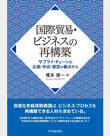
Areas of Specialization: Management, International Trade, and Global ManagementDr. Shunichi Enomoto graduated from Faculty of Law, University of Tokyo in 1990 with a Bachelor of Law degree. The same year he joined Ministry of International Trade and Industry and had been engaged in industrial and international trade policies for three decades. In 2019, he became Associate Professor of International Business at School of Business Administration, Kwansei Gakuin University, and assumed his current position in 2023. He received LL.M. degree from Columbia Law School in 1996 and Ph.D. in Business Administration from Saitama University Graduate School in 2022. His interests include international management, servitization and digital economy. His major publications include his doctoral dissertation, “Service-led Growth and Decommoditization of Manufacturing Firms” (2022), Reconstructing International Trade and Business (Chuokeizai-sha, 2025), and etc.
- Share articles


